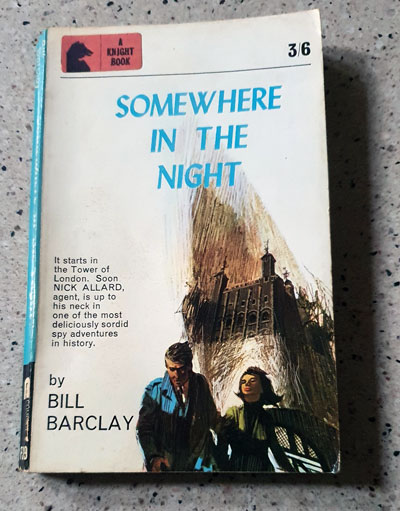
Last week, someone very kindly donated a 1966 copy of the spy novel Somewhere in the Night, written by Bill Barclay. The name rang a bell, so I did a little digging, and it turns out Bill Barclay was a pseudonym for the legendary Michael Moorcock, the creator of Elric of Melniboné and the multiverse-spanning Eternal Champion fantasy novels. In 1966, Moorcock was a jobbing pulp writer, churning out books to order in as little as three days.
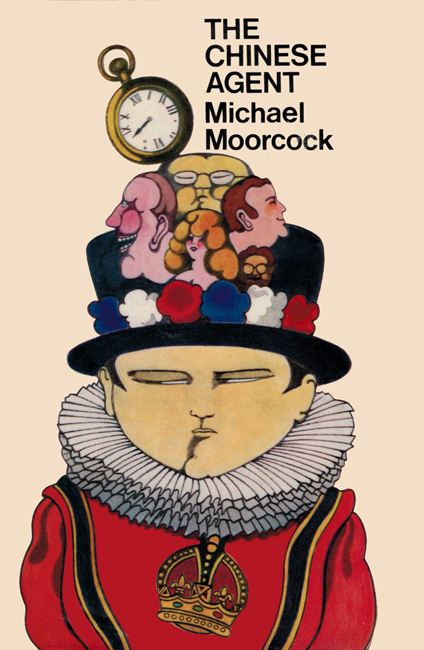
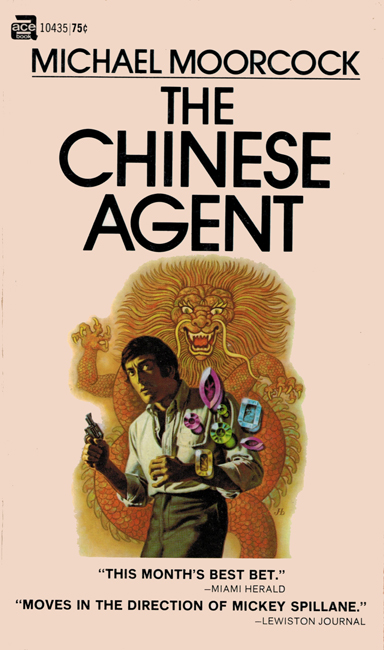
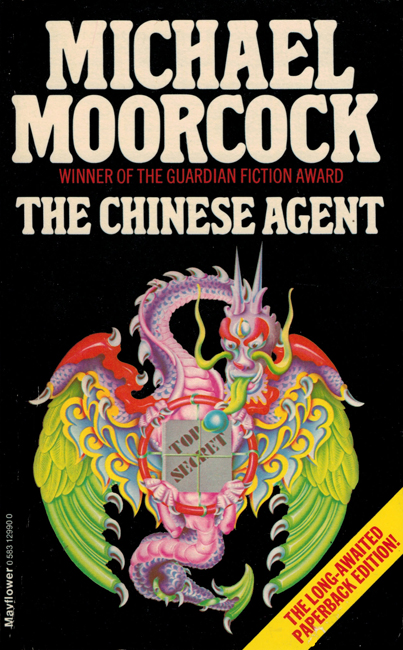
If you look for this book today, you’ll likely find it under the title The Chinese Agent. But it isn’t just the title that changed between your 1966 edition and the modern reprints; it was a total literary transformation.
In the original version, the protagonist is actually named Nick Allard. He was originally conceived for a series called the S.M.A.S.H. trilogy. However, when Moorcock revised the book for republication in 1970, he renamed the hero Jerry Cornell.
This wasn’t a random edit. By 1970, Moorcock was deep into his Jerry Cornelius stories. By changing the name to Cornell, he retroactively pulled this bumbling spy into his sprawling Multiverse.
The JC Connection
This brings us to the most fascinating layer of the book: those JC initials. In the Moorcock universe, initials are never just initials. By turning Nick Allard into Jerry Cornell, Moorcock linked him to a long line of recurring characters who serve as:
- Messianic Archetypes: They are frequently saviour figures (a clear play on the Jesus Christ parallel).
- The Eternal Champion: These characters represent a single soul who adapts to whatever era they are in—in this case, the height of the 1960s spy boom.
- Agents of Chaos: Whether it’s Cornell or Cornelius, they move through the world with a stylish detachment, breaking the rules of their respective genres.
A Master Finding His Voice
Comparing the two versions is like watching a literary revolution in real-time. The 1966 Barclay original is ‘shaggier’—it follows more traditional pulp tropes because Moorcock was still acting as a ghostwriter (taking over the series from James Moffatt).
When it became The Chinese Agent, Moorcock performed some serious literary surgery:
- The Trim: He cut about a quarter of the text, removing the repetitive pulp filler.
- The Polish: He added a brand-new opening chapter and tightened the pace.
- The Satire: He leaned much harder into the absurd, transforming a standard spy pastiche into a comic caper that parodies the James Bond craze (complete with characters like Inspector Crapper).
If, like me, you’re interested in the process of writing, and the development of writers and their work, comparing the two versions is incredibly enlightening!